
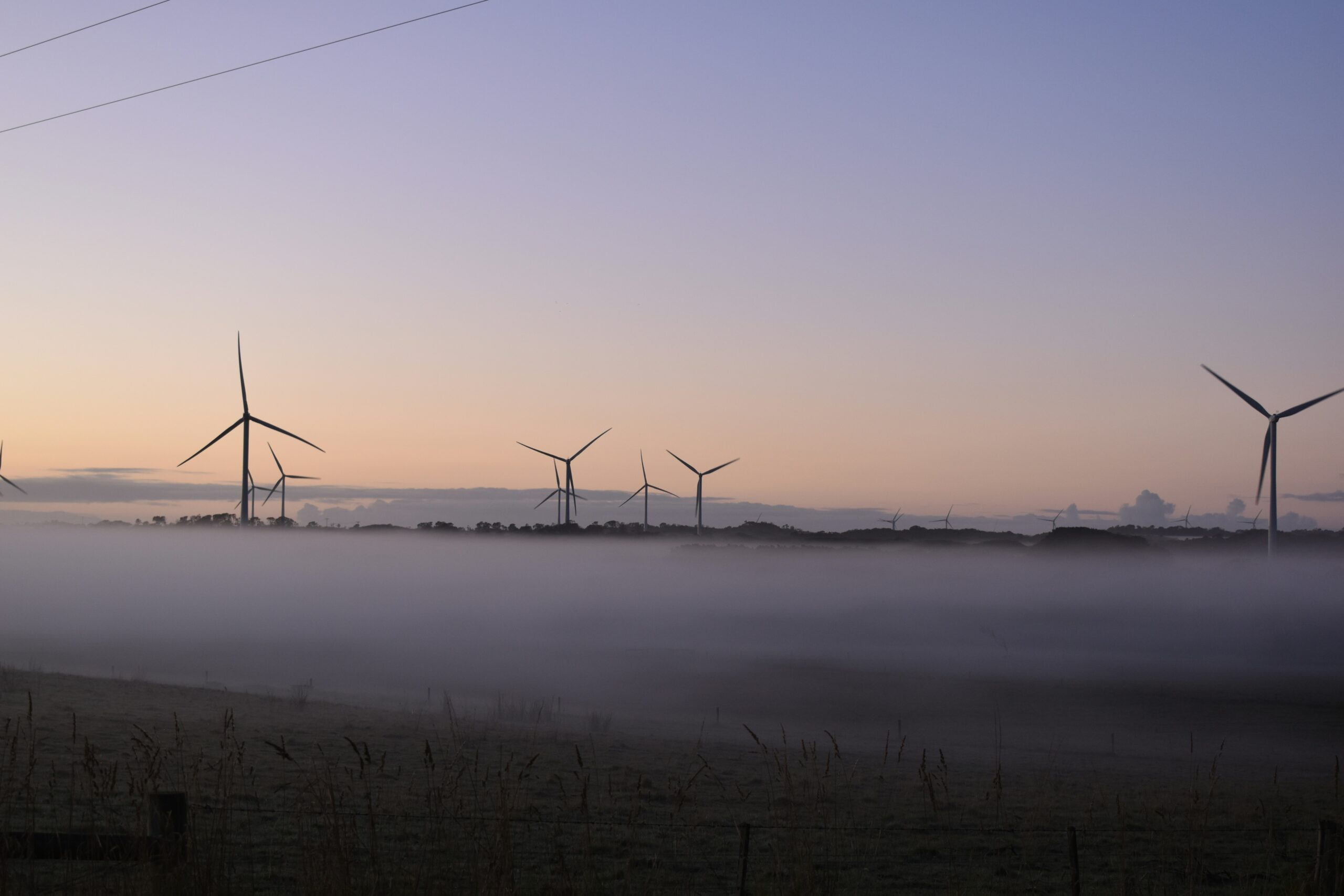
Energy transition and decarbonisation are now pressing topics in Western Australia, especially in the mining industry. Across WA, Renewable Energy is shifting from being a ‘nice to have’ sustainability initiative to something much more strategic. And for many operations, it’s no longer a matter of if renewables will play a role, but how fast they can be integrated.
In the mining sector, energy is both a major cost input and a major emission source. The sector’s reliance on non-renewable sources is widely due to their availability, cost-effectiveness and remote operating nature. However, pressures are increasing for more sustainable energy sources, driven by environmental concerns, regulatory legislation, and economic factors, particularly carbon credit pricing.
Right now, the mining industry is sitting at a turning point, with electric mines able to operate at significantly lower costs, and ‘between 56% and 88% less than those powered by diesel,’ as reported by the Electric Mine Consortium (MiningTechnology 2024).
With the WA government (and many other countries globally) committing to net-zero by 2050, the next five years of energy decisions will shape operational performance for decades.
What does renewable energy actually mean for WA mines over the next decade, beyond reporting targets?
Western Australia’s role in the global energy transition
The whole world is also transitioning to a more sustainable future, and Australia is at the forefront. As one of the largest suppliers for the materials needed for the energy transition, Australia is creating both opportunity and pressures. As the global demand for these minerals surge, fuelled by the growth in emergent renewable technologies, so will the urgency of addressing the environmental impact associated with their extraction and processing.
It will become more than just a concern; it will become a need that can no longer by ignored.
“The International Energy Agency (IEA) has forecast that EVs and energy storage systems alone could drive a dramatic increase in demand for certain critical minerals over the next two decades (IEA 2021).”
Companies need to strategize now to meet these global standards, if they want to remain competitive. Investor expectations are rising, with investors increasingly monitoring carbon emissions and climate-related financial risk as part of their investment assessments, particularly with the introduction of Australia’s new mandatory climate-related financial disclosure requirements under the AASB Climate-related Disclosures standard (AASB 2024). Manufacturers are moving beyond reporting operational emissions to scrutinising carbon intensity across their supply chains. This shift is driving stronger procurement standards and greater emphasis on traceability and low-carbon sourcing.
WA mining companies are being exposed to:
- Customers decarbonising supply chains
- Manufacturers reporting Scope 3 emissions
- Green procurement standards in Europe and Asia
- Increased transparency around embodied carbon
Which means, carbon intensity may increasingly influence who wins long-term contracts (IEA 2023).
Energy decisions today shape cost structures for decades
Now is the time to be thinking about energy infrastructure decisions. These decisions are long-life capital decisions that will directly influence future cost competitiveness.
Energy is one of the largest operating costs for many WA mines, particularly remote operations reliant on diesel. Current operational energy costs are estimated at around 7–12% of total costs in some sub-sectors with the potential of rising toward 20–30% over the next decade if energy intensity remains unmanaged (IGCC 2020).
We are seeing that electrified or hybrid systems are able to materially reduce long-term operating costs, making energy design not only an environmental decision, but also an economic decision.
In the long-term, early, strategic energy design can help determine structural competitiveness, giving an advantage over an operation with:
- High energy emissions
- Exposure to fuel volatility, and
- Supply chain risk.
Regardless of whether companies are expanding existing operations, developing new projects and upgrading infrastructure, this is the time to consider more integrated energy. The next 5-10 years represent a significant capital reinvestment window.
Renewable energy as risk management
Cost is only part of the equation. Increasingly, energy exposure is becoming a risk consideration for mining operations.
For many WA sites, particularly those operating remotely, reliance on diesel has been accepted as ‘part of doing business.’ However, that reliance on fossil fuels bring along with it exposure.
Exposure to:
- Fuel price volatility
- Supply chain disruptions
- Transport and logistics challenges, and
- External market shocks
Energy volatility can lead to compounded risk.
At the same time, investor scrutiny around greenhouse gas emissions is intensifying. As governments tighten regulatory mechanisms, seen with Australia’s mandatory climate reporting regime, emission reports are no longer confined to sustainability reports, but are entering boardroom and capital market discussions.
Carbon footprint increasingly intersects with enterprise risk, not just environmental performance. In this context, renewable and hybrid energy systems can represent more than emissions reduction. They can also help to stabilise energy costs, reduce reliance on external fuel markets and limit exposure to future policy tightening (T. Jin, D. Kim 2023).
Electrification changes more than emissions
While much of the renewable energy discussions are centred on carbon and cost, there are broader operational and workforce implications for mining.
Diesel power equipment has long been the standard for its proven reliability in the mining sector. However, there are many operational constraints. Diesel particulate matter poses well documented and serious health risks with prolonged exposure, especially in underground environments, where ventilation is critical. This highlights electrification as a health imperative, an additional bonus to the initiative.
Reducing reliance on diesel can significantly alter site dynamics. Electrified fleets generally require less ventilation, which can decrease both infrastructure needs and ongoing energy consumption. Lower heat output and reduced particulate emissions can further enhance underground operating conditions.
As ESG expectations evolve, health and safety measures remains one of the most scrutinized metrics in the sector. Demonstrating a commitment to reducing diesel exposure and improving underground conditions shows that social license considerations align with operational decisions.
This is where energy begins to intersect with operational performance. Renewable Energy can reshape how mines operate. It is so much more than a fuel switch.
None of this suggests that electrification is straightforward. Equipment costs remain higher in many cases, with electric mining trucks and heavy equipment sometimes costing up to twice as much as their diesel counterparts (PowerTechnology 2025), and careful planning is needed for its integration.
Renewable energy and electrification are not solely a climate initiative. They are part of a broader operational evolution within the industry.
What the next decade could hold
Looking ahead, the transition in WA mining is unlikely to be an overnight transformation. We will see incremental change. Hybrid systems integrated into existing sites, electrified fleets introduced in stages, and energy planning integrated earlier into mine design.
For new projects in particular, companies are beginning to assess long-term energy exposure, carbon intensity and infrastructure requirements during early-stage planning, as opposed to retrofitting renewable solutions later.
Pay during design or pay with offsets later.
Not every site will move at the same pace. Infrastructure constraints vary. Capital cycles differ. But the underlying direction is becoming clearer.
The question for mining leaders is no longer whether renewable energy should be integrated into WA operations. It is now how deliberately and strategically it is integrated.
In a market increasingly attentive to carbon intensity, will WA producers be seen as compliant participants, or as competitive, low-carbon suppliers?
