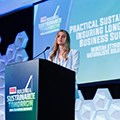

The initiative is designed to fund public projects that support Australia’s transition to net-zero emissions by 2050 and contribute to broader environmental objectives. More information is available through the Australian Office of Financial Management.
Understanding Australia’s Green Treasury Bond
The Green Treasury Bond program enables investors to support public projects focused on reducing greenhouse gas emissions, increasing renewable energy production and enhancing biodiversity conservation.
By attracting green capital, the program aims to increase the scale and credibility of Australia’s green finance market while supporting the nation’s net-zero transition. Further information is available from Treasury Australia.
Green Treasury Bond Opportunities for Australian Businesses
Australia’s $7 billion Green Treasury Bond is relevant to more than large corporations. It may create opportunities across multiple industries, from small businesses to major infrastructure providers.
Energy and Renewables: Scaling Clean Power Solutions
Opportunity: Australia’s transition to renewable energy requires solar, wind and battery storage solutions.
Example: Energy Storage Solutions Australia manufactures grid-scale battery storage systems. With increased funding for grid infrastructure, companies such as ESSA may be able to secure government contracts to develop and deploy large-scale battery solutions that stabilise the grid and support renewable energy use.
How Businesses Can Add Value:
- Solar and wind farm developers can bid for government-backed projects.
- Battery manufacturers can scale operations to support energy storage initiatives.
- Engineering firms can partner with state governments to upgrade grid infrastructure.
Reference: Pendal Group Investment in Green Bonds
Sustainable Construction and Infrastructure: Greener Cities and Transport
Opportunity: Green bond funding can support low-carbon buildings, transport electrification and smart infrastructure.
Example: Hickory Group is an Australian construction company that pioneered prefabricated modular buildings using low-carbon materials. As green building standards become stricter, companies investing in sustainable construction methods may be better positioned for government projects and private sector contracts.
How Businesses Can Add Value:
- Construction firms can bid for public infrastructure contracts that require net-zero materials.
- Architects and engineers can specialise in climate-resilient design.
- Developers can adopt carbon-neutral supply chains to attract ESG-focused investors.
Reference: Australian Treasury Minister’s Statement
Green Finance: Funding for Sustainability-Focused Businesses
Opportunity: Banks and investors are expanding green finance products, which may improve access to finance for businesses with eligible sustainability projects.
Example: Bank Australia’s clean energy loans support businesses investing in solar, electric vehicle fleets or energy-efficient upgrades through green loans and sustainability-linked financing.
How Businesses Can Add Value:
- Small and mid-size businesses can apply for green loans to install solar panels, electric vehicle chargers or efficient lighting.
- Agribusinesses can explore funding for regenerative farming and carbon sequestration projects.
- Manufacturers can adopt circular economy processes to improve their eligibility for sustainability-linked finance.
Reference: Bank Australia Green Finance
Circular Economy and Waste Management: Turning Waste Into Value
Opportunity: Recycling, waste reduction and circular economy solutions are key priorities for green investment.
Example: Close the Loop Australia repurposes soft plastics and used toner cartridges into road asphalt. Increased funding for recycled material innovation may help businesses such as Close the Loop expand their operations and compete for procurement contracts.
How Businesses Can Add Value:
- Recycling firms can expand operations to process textiles, plastics and electronic waste.
- Fast-moving consumer goods brands can develop returnable packaging models to respond to waste reduction requirements.
- Logistics companies can explore reverse supply chain solutions that support circular economy outcomes.
Reference: Close the Loop Group
Biodiversity and Land Regeneration: Nature-Based Solutions
Opportunity: Green bond funds can support land conservation, carbon farming and regenerative agriculture.
Example: Wilmot Cattle Co. is a regenerative farming company that sequesters carbon in soil while improving productivity. Through carbon credit markets, businesses using similar approaches may be able to generate value from verified carbon offsets.
How Businesses Can Add Value:
- Farmers and agribusinesses can adopt regenerative practices and explore access to carbon funding.
- Land developers can integrate biodiversity offsets into urban planning.
- Food and beverage companies can invest in sustainable sourcing partnerships.
Reference: Carbon Market Institute Australia
Strategic Considerations for Australian Businesses
To capitalise on these opportunities, Australian businesses should consider the following actions:
- Align Business Models With Sustainability Goals: Integrate environmental objectives into core business strategies to support participation in green projects and financing.
- Stay Informed About Funding Opportunities: Monitor announcements from government agencies and financial institutions regarding projects and funding connected with the green bond program.
- Invest in Sustainable Technologies: Adopt or develop technologies that reduce environmental impacts and strengthen the business’s sustainability position.
- Collaborate With Stakeholders: Engage with government bodies, industry groups and other businesses to form partnerships that support sustainable initiatives.
Preparing for Green Finance Opportunities
Businesses seeking to capitalise on green finance opportunities can take the following steps:
- Review your sustainability strategy: Assess how the business aligns with Australia’s net-zero goals.
- Identify funding and investment options: Explore relevant government and private funding sources.
- Take practical action: Implement suitable energy efficiency, circular economy and ESG initiatives.
Australia’s sustainability requirements continue to evolve. Businesses that prepare early may be better positioned to participate in the growing green economy.
Australia’s inaugural $7 billion Green Treasury Bond represents a national commitment to environmental sustainability and creates opportunities for businesses to contribute to projects supporting the green economy.